[置顶] 2026-01-01 中山低温院极低温实验室成立!
极低温实验室归属中山低温院极低温技术研究中心。实验室自建立以来,一直围绕极低温设备及系统研制、极低温热质传递理论研究二个主题开展工作。实验室研究方向为稀释制冷、分离纯化、氢能利用。实验室成员承担了包括纵向课题、企业横向合作、低温院预研项目在内的多个研究项目,总经费达千万元。实验室具备millikelvin制冷机、液氢泵实验台、低温吸附实验台、PCHE实验台、孔隙率测试仪、比表面积分析仪、电化学工作站等平台和设备。
热烈欢迎专注低温及氢能、优势互补、有志本领域开拓的课题组及团队交流合作!
热烈欢迎思维活跃、自律、合作精神佳、基础扎实的有志青年加入极低温实验室!
News
[2026-09-21] 孟鹏通主导开展的“氢液化用紧凑高效PCHE换热器技术研究及性能测试”项目通过验收!
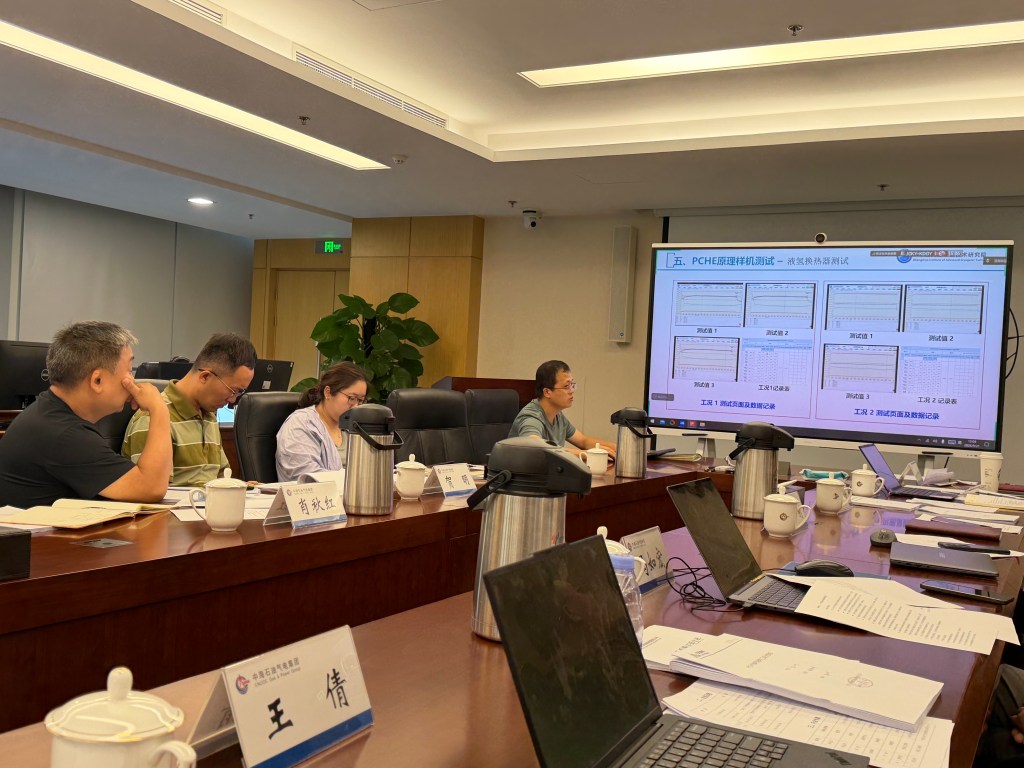
孟鹏通、王倩、刘琦在北京参加“氢液化用紧凑高效PCHE换热器试制及性能测试技术”项目验收审查会。来自北京克莱索斯科技发展有限公司、中国石油大学(北京)、中国科学院理化技术研究所、西安电子科技大学、大连理工大学、中海石油气电集团技术研发中心的专家组认真听取了项目组的研发成果汇报。经质询研讨,专家组认为项目组完成了技术服务合同规定的全部研究内容,提交了全部成果文件,满足合同约定的技术要求,符合项目合同验收标准,同意通过结题验收。孟鹏通和兰石换热相关人员共同开展和汇报了项目工作。项目组将依托实验平台持续开展PCHE相关研究。
[2026-08-26] 刘琦博士获得国家自然科学基金(NSFC)青年科学基金项目(C类)资助!
青年科学基金项目(C类)支持青年科学技术人员在科学基金资助范围内自主选题,开展基础研究工作,特别注重培养青年科学技术人员独立主持科研项目、进行创新研究的能力,激励青年科学技术人员的创新思维,培育基础研究后继人才。
[2026-08-19] 南京理工大学李强副教授团队访问实验室!
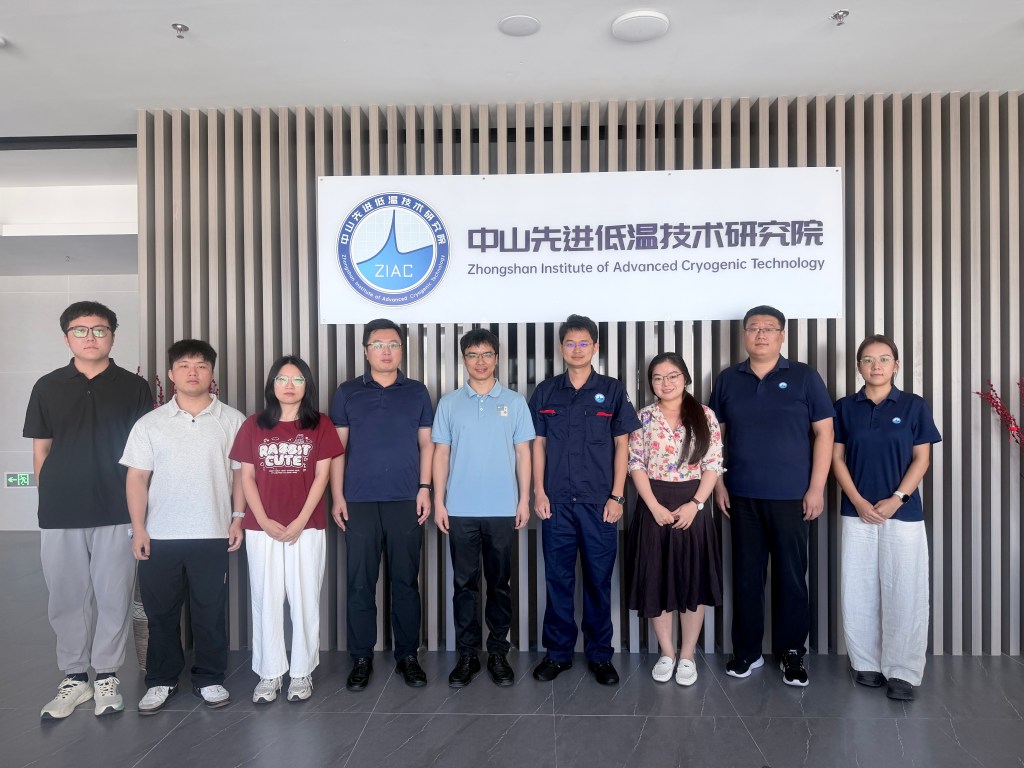
[2026-08-11] 长春理工大学、Hannam University、Incheon National University学者访问实验室!
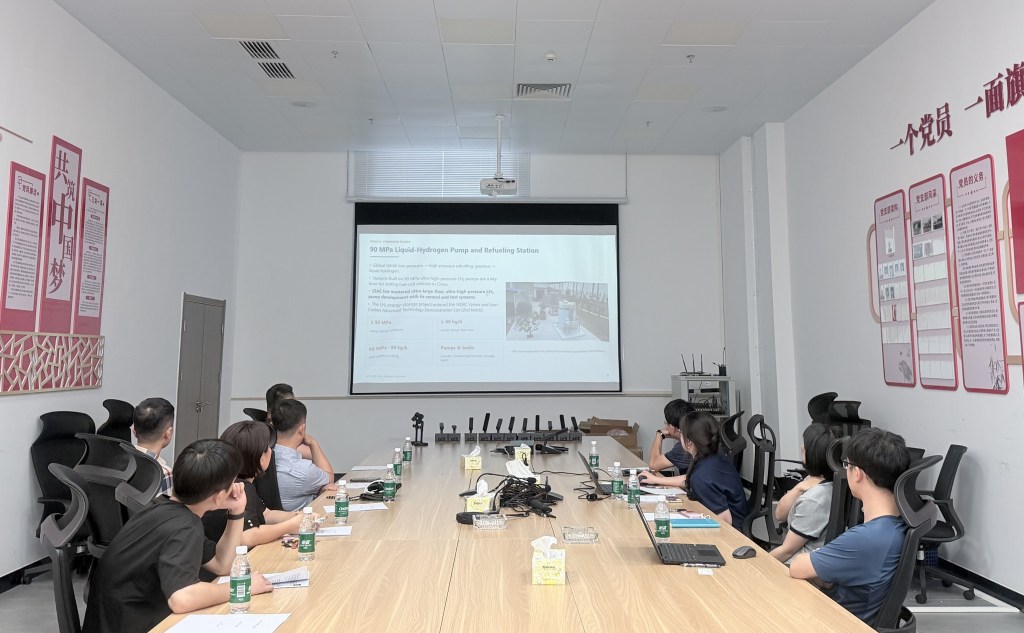
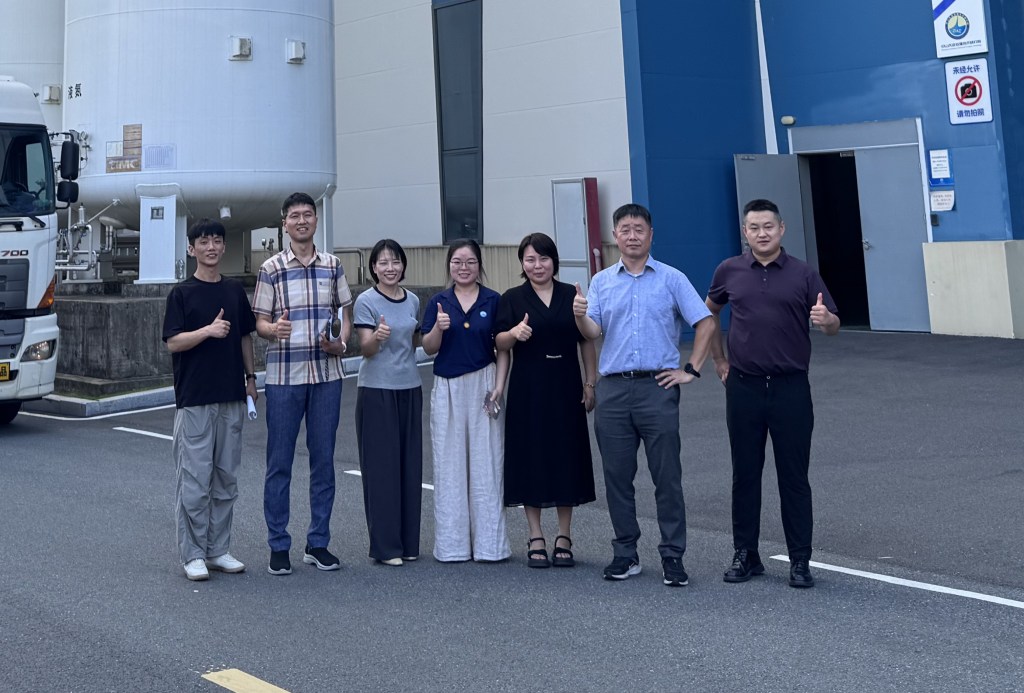
[2026-07-08] 孟鹏通获得某集团横向课题资助!
[2026-06-30] 崔文慧博士的论文发表于《化工学报》期刊!
低温间歇流蓄冷间壁式换热器换热特性的数值与实验研究. 化工学报 2026, 接收
面向脉冲管膨胀式低温制冷机在液氦温区10~100 W制冷量应用需求,对其核心部件——低温间歇流蓄冷间壁式换热器的换热特性开展研究。采用理论分析、数值模拟与实验验证相结合的方法,揭示了间歇流工况下器壁蓄冷效应对换热性能的影响规律。结果表明,换热效率随质量流量增加呈下降趋势;相同质量流量下,提高换向频率可显著提升换热效率,但间歇流工况下的整体效率仍低于连续流工况。提出的蓄冷效应因子(Cs)可定量表征间歇流工况下器壁热容量与换向频率耦合作用对换热性能的影响。实验结果与数值模拟结果的最大偏差为2.66%,验证了所建模型的可靠性。本研究为间歇流蓄冷换热器的结构优化提供了理论依据,并为液氦温区脉冲管膨胀式制冷机的后续设计与研究提供参考。
[2026-06-24] 喻凡博士的论文发表于《化工学报》期刊!
Millikelvin温区烧结式换热器流动与传热特性数值模拟研究. 化工学报 2026, 接收
液氦与固体界面之间的Kapitza热阻在毫开尔文温区对多孔介质换热器(PMHEs)的流动与传热性能具有重要影响。为探究Kapitza热阻对烧结多孔介质换热器传热效率的影响规律,建立了一个局部热非平衡模型,该模型综合考虑了轴向导热、粘性耗散效应以及Kapitza热阻随温度的变化特性,用于描述多孔介质区域中的传热行为;烧结金属多孔介质内的流体流动采用Brinkman-Forchheimer方程进行模拟。结果表明,该模型能够有效捕捉液氦与固体界面处的温度跳跃现象。基于上述模型,分析了不同工况下的温度和压力变化规律,揭示了其背后的传热机理。此外,研究了Kapitza热阻和轴向导热对传热性能的影响,并系统探讨了流量、传热面积和烧结参数等因素对流动传热性能的影响机制。
[2026-06-04] 吴园园的论文发表于Cryogenics期刊!
Yuanyuan Wu, Qi Liu*, Qian Wang*, Shaogang Wang, Linghui Gong. Numerical simulation of liquid hydrogen flow boiling based on population balance model. Cryogenics 2026, 104402
Liquid hydrogen boiling flow is of great importance for the next generation aircraft and propulsion technologies. In this paper, a numerical study was conducted on the flow boiling of liquid hydrogen in a horizontal circular tube with a diameter of 15 mm within the range of wall heat flux 0 ~ 12000 W/m2, saturation pressure 250 ~ 300 kPa, and inlet subcooling 0 ~ 4 K. Originally, considering the variation in bubble size during boiling of liquid hydrogen flow, the population balance model was used to describe bubble coalescence and break-up behavior during flow boiling which was calculated by Rensselaer Polytechnic Institute boiling model. The results were compared with experimental data, showing that bubble coalescence and break-up have significant effects on flow boiling characteristics. Subsequently, the distribution of bubbles in various size groups, the distribution pattern of bubble fraction, and the variation pattern of heat transfer coefficient were analyzed. It was found that the population balance model can effectively describe the basic heat transfer characteristics and two-phase flow dynamics of liquid hydrogen subcooled boiling. Furthermore, it was found that the average gas content in the cross-section increases nonlinearly along the axial direction, and different bubble particle sizes can affect the simulation accuracy of heat transfer coefficient and average bubble fraction in the cross-section. Finally, for the prediction of heat transfer coefficient, the suitable particle size range of population balance model is 0.1 ~ 10 mm. For the prediction of bubble fraction, the suitable particle size range of population balance model is 0.1 ~ 5 mm.
[2026-03-09] 中海油气电集团三位专家来访极低温实验室并交流PCHE项目进展
中海石油气电集团有限责任公司是中国海油的全资子公司,负责统一经营和管理中国海油天然气及发电板块业务,是国内最大的LNG(液化天然气)进口商,是国内第二大天然气供应企业,也是国际第三大LNG进口商。
[2026-02-06] 吴园园的论文发表于机械工程师期刊!
吴园园, 华利, 刘金伟, 殷红强*, 于立功, 张国. 基于ANSYS的新型穿舱自密封结构设计研究. 机械工程功师 2026, Accepted.
[2026-02-03] 孟鹏通、崔文慧、刘琦前往兰州兰石换热设备有限责任公司交流PCHE项目进展
兰州兰石换热设备有限责任公司(简称“兰石换热”)成立于2002年,是兰石重装全资子公司,专注于板式换热器及相关产品的研发、生产和技术服务。公司具备较强的设计能力,产品广泛用于石油、化工等领域,并在兰州新区等地设有生产基地,致力于提供高效的能量传递解决方案。
[2026-01-28] 吴园园的论文发表于Industrial & Engineering Chemistry Research期刊!
Yuanyuan Wu, Qi Liu, and Qian Wang. Numerical Simulation of Subcooled Flow Boiling in Water and NaCl Solution Using a Coalescence Breakup Nucleation Model. Industrial & Engineering Chemistry Research 2026, 65, 3: 1830–1846.
This study systematically investigates vapor bubble dynamics in subcooled flow boiling systems for both aqueous and saline solutions across a comprehensive range of thermal-hydraulic conditions. Through Eulerian multiphase computational simulations, we rigorously evaluate the predictive capabilities of various bubble interaction models including coalescence, breakage, and nucleation mechanisms. The numerical predictions are quantitatively validated against experimental benchmark data with detailed error analysis performed. Key findings demonstrate that simulation accuracy is critically dependent on the optimal selection and combination of bubble interaction models. Specifically, the Yao correlation for bubble nucleation yields superior predictive performance compared with alternative approaches. Notably, the exclusion of coalescence models in saline solution simulations enhances the accuracy, attributable to ionic interference effects on bubble interactions. Furthermore, sensitivity analysis reveals that bubble breakage phenomena exert minimal influence on simulation outcomes under most operational conditions.
[2025-12-22] 喻凡博士的论文发表于Applied Thermal Engineering期刊!
Fan Yu, Xiaoping Luo, Uwe Hampel, Qian Wang, Wei Ding. Experimental study of flow boiling performance in novel space-filling fractal-tree minichannel rectangular heat sinks. Applied Thermal Engineering 2026, 288, 1: 129577.
Bioinspired fractal-tree structures have recently emerged as a promising single-phase liquid-cooling technology for electronic applications. Flow boiling has been widely regarded as a solution to address the growing challenge of the continuously increasing heat flux. However, the feasibility of combining flow boiling and fractal-tree minichannels (FTMCs) for chip cooling to enhance heat transfer remains unclear due to the limited understanding of their comprehensive flow boiling performance. To this end, this work aims to develop a novel Y-type space-filling fractal-tree minichannel rectangular heat sink compatible with rectangular electronic modules, experimentally characterize its boiling performance and bubble dynamics, and systematically evaluate its overall heat-transfer and pressure-drop characteristics. Flow visualization studies were conducted to explore bubble dynamics, bubble behaviors at the bifurcations such as confinement, elongation, or splitting and flow pattern evolution in FTMCs. The flow boiling experiments were performed at different mass and heat fluxes as well as branching levels to systematically study the boiling performance in terms of boiling curves, heat transfer coefficients, and pressure drop. Furthermore, the bubble splitting models for FTMCs were obtained based on the visualization analysis. The results reveal that FTMCs exhibit superior comprehensive boiling heat transfer performance to the conventional rectangular parallel minichannels. The FTMC-B4 achieves the highest flow boiling heat transfer enhancement ratio of 1.38 and a comprehensive performance evaluation criterion of 1.48. This study will inform future applications of fractal-tree structures for flow boiling heat transfer in micro/mini-channels.
